
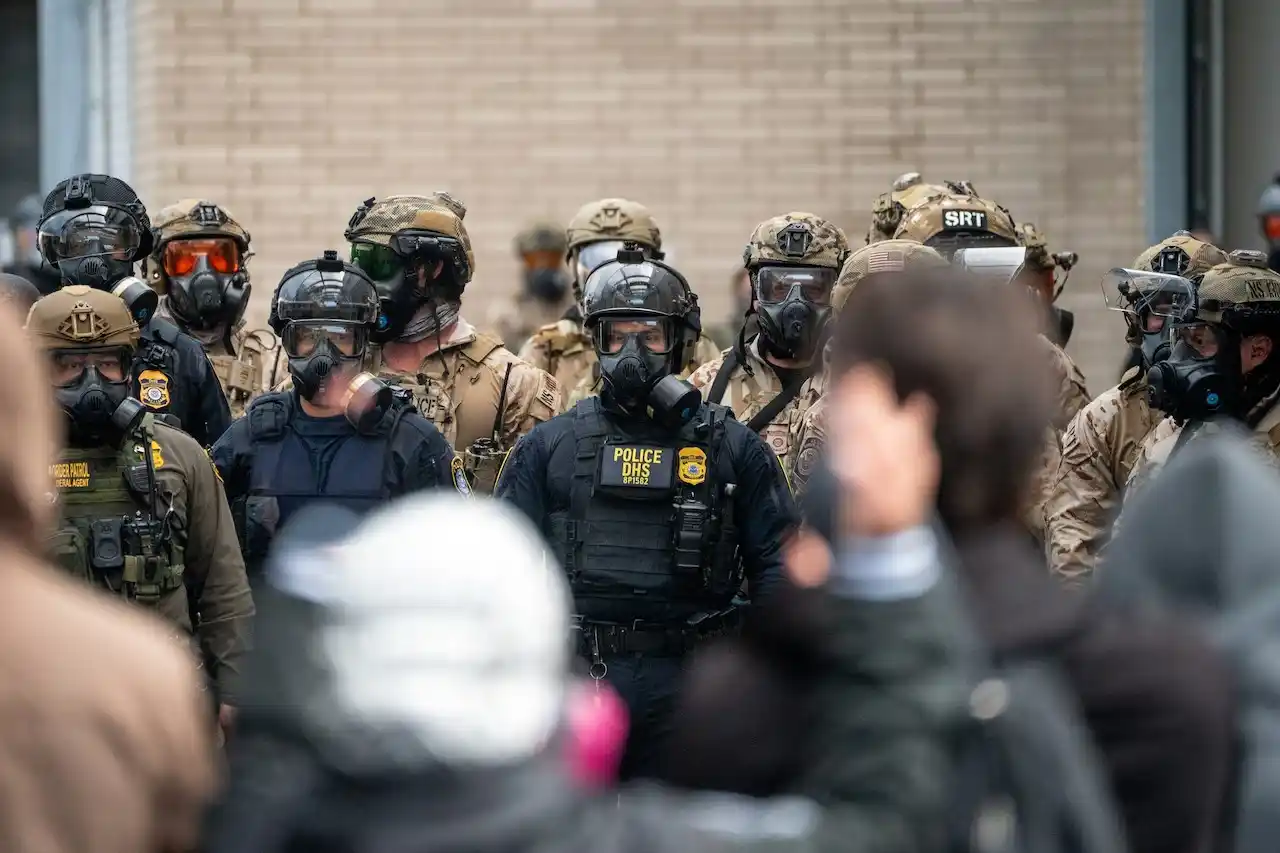
A federal judge in Oregon is thinking about a temporary order that would put limits on how federal agents can use force during protests outside an Immigration and Customs Enforcement facility in Portland.
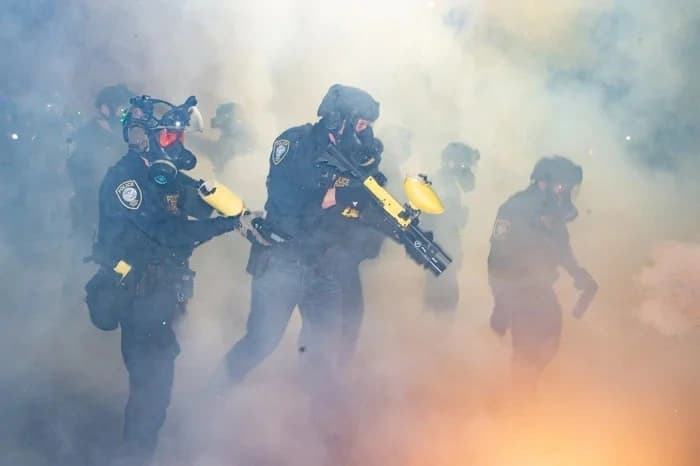
Agents used tear gas, pepper balls, and rubber bullets on Saturday against a large crowd protesting near the South Waterfront ICE building. This hearing is happening after that. Keith Wilson, the mayor of Portland, said that the event was mostly peaceful and that most of the people there did not break any laws or pose a threat.
Saturday's protest was part of a larger set of protests across the country against the current administration's immigration policies and recent deadly encounters between federal agents and civilians in Minneapolis, where two U.S. citizens died.
"They are using tear gas on kids. They are using tear gas on older people. They're using tear gas on families.
— Lawyer Matthew Borden at a court hearing
Witnesses said that things were very chaotic, like when a tear gas canister broke a window in an apartment and parents ran to protect their kids in strollers. One person who lived there said it was terrifying to see families trying to get away while agents kept using chemicals.
Last November, the American Civil Liberties Union of Oregon filed a class-action lawsuit against what they say is repeated retaliatory violence by federal officers at the Portland ICE location.
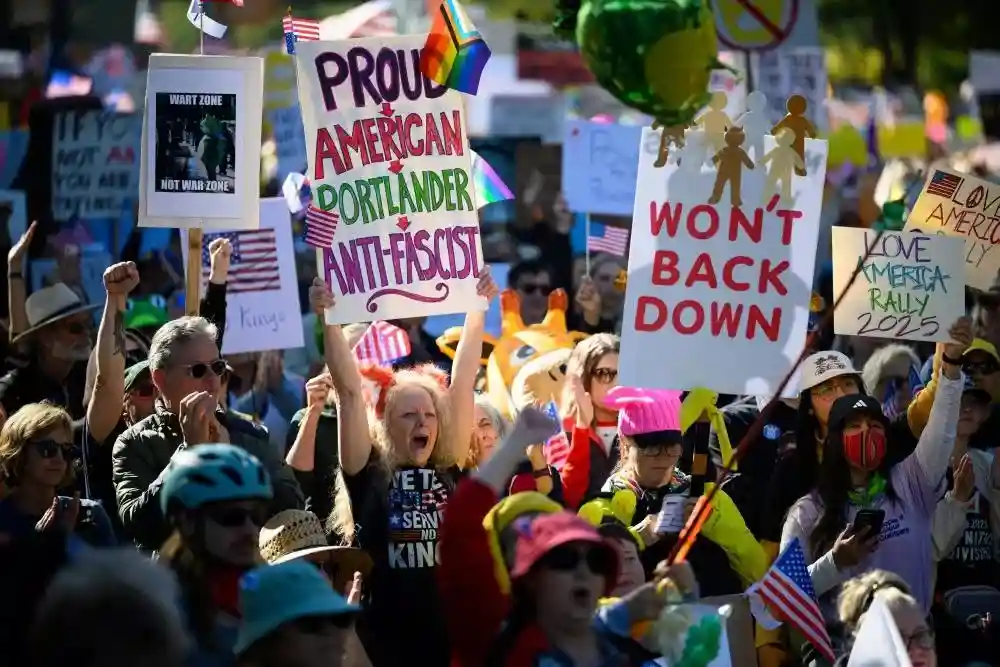
Mayor Wilson publicly asked ICE agents to leave the city, saying that their repeated use of force against protesters had taken away its legitimacy and replaced it with shame.
Court News and Legal Arguments
On Monday, lawyers showed U.S. District Judge Michael H. Simon evidence of the weekend events as part of a larger pattern. They said that federal officers used more force even when protesters were trying to back away.
The judge said he would decide by Tuesday whether to issue a temporary restraining order that would limit how much force agents could use at future demonstrations at the facility.
Health Concerns and Historical Context
There have been a lot of protests in Portland over the years that have used a lot of tear gas. Investigations found that chemical agents were used at levels far above federal safety limits during protests in 2020 after George Floyd's death, which raised serious public health concerns.
What You Should Learn from the Case
The plaintiffs want the lawsuit to stop what they call retaliatory violence by federal officers.
Recent protests were sparked by actions taken to enforce immigration laws and deadly events involving federal agents.
Witnesses say that tear gas was used on families and peaceful protesters without any reason.
✓ Mayor says most of the protest on Saturday was peaceful
✓ Tear gas, pepper balls, and rubber bullets were used
✓ Judge will decide on the use of force by Tuesday
✓ The ACLU of Oregon filed a lawsuit in November
The outcome could limit how the federal government can respond to protests at immigration facilities.
More general effects
This case shows that there is more and more tension between federal immigration enforcement and people's right to protest. The judge's decision could affect how agents deal with future protests in Portland and maybe even across the country.
People who care about public health are still worried about the use of tear gas, especially near homes and families.
You have lost all credibility because of your use of violence and your trampling of the Constitution.— Keith Wilson, Mayor of Portland
Protests against immigration policies are still going on all over the country. The Portland case may be a key test of how to balance the power of law enforcement with the rights of protesters and journalists under the Constitution.